Oh, hey there, future architects and design enthusiasts! Have you ever caught yourself daydreaming about buildings that practically design themselves or cities that adapt to our every need?
Well, what once felt like pure science fiction is rapidly becoming our reality, and it’s all thanks to the incredible synergy between architecture and artificial intelligence.
I’ve been keeping a close eye on this space, and trust me, the pace of innovation is absolutely breathtaking. We’re talking about AI-powered tools that aren’t just speeding up mundane tasks, but genuinely sparking entirely new levels of creativity and efficiency, allowing us to build smarter, greener, and more responsive spaces than ever before.
From generative design that conjures up thousands of optimized layouts in a flash to intelligent systems that predict a building’s energy consumption before it’s even built, the way we conceive, construct, and even inhabit our structures is being profoundly reimagined.
It’s a thrilling era, where the boundaries of what’s possible are constantly expanding, and I’ve got so much to share about how this tech is shaping our world, from bustling cityscapes to the very homes we live in.
So, are you ready to peek into this exciting future and see how AI is truly revolutionizing the world of architecture? Let’s dive deeper into this below!
Oh, hey there, fellow design aficionados! Remember those days when we used to sketch endlessly, trying to perfect a layout, or painstakingly calculate every single structural load?
I certainly do! It was a labor of love, but let’s be real, it could be incredibly time-consuming. What if I told you that a lot of that heavy lifting, both literal and metaphorical, is now being handled by some seriously smart tech?
It’s true! I’ve been completely blown away by how artificial intelligence is stepping into the architectural arena, not to replace us, but to supercharge our creative process and tackle challenges we once thought impossible.
Designing Smarter, Not Harder: The AI Co-Pilot for Creativity
When I first heard about generative design, I’ll admit, I was a little skeptical. Could a machine really come up with something beautiful and functional?
Well, let me tell you, my mind has been absolutely changed. Imagine inputting your core parameters – site conditions, sunlight exposure, material preferences, even budget constraints – and in mere moments, AI spits out not just one, but *thousands* of optimized design solutions.
It’s like having an army of junior architects working round the clock, exploring possibilities you might never have even considered in a lifetime of manual drafting.
This isn’t about removing the human touch; it’s about freeing us from the mundane so we can focus on the artistry and the intricate details that truly make a space sing.
I’ve seen architects use these tools to discover entirely new structural forms or incredibly efficient spatial arrangements that reduce material waste significantly.
It truly feels like having a brilliant co-pilot in the design process, constantly pushing the boundaries of what’s possible and giving us an unprecedented level of insight into our creations before we even break ground.
It really accelerates the early stages of a project, allowing for more time to refine and perfect the human experience within the structure.
Unleashing Unprecedented Design Exploration
The sheer volume of design iterations that AI can produce is nothing short of astounding. Think about it: a human architect might develop a handful of concepts for a complex building, each requiring significant time.
With AI, you feed it your criteria, and it can generate thousands of viable options in minutes, each a unique solution to your specified problem. This allows us to explore a much wider design space, discovering unexpected forms and highly optimized layouts that we might otherwise miss.
It’s like having a superpower for brainstorming!
Optimizing for Performance and Efficiency
Beyond aesthetics, AI-driven generative design excels at optimizing for performance. Want a building that maximizes natural light, minimizes energy consumption, or provides the best airflow?
AI can run simulations on countless designs, evaluating each against your performance metrics. It can identify the most efficient structural forms or the best window placements to reduce heat gain or loss, leading to more sustainable and cost-effective buildings in the long run.
From my personal experience, seeing the data on how much energy could be saved by a slight alteration in orientation or window size is incredibly eye-opening.
Bringing Blueprints to Life: AI in Construction
The construction site has traditionally been one of the most resistant areas to rapid technological change, but AI is finally making significant inroads, and it’s genuinely exciting to watch.
I’m not just talking about fancy software in an office; I’m talking about AI right there on the ground, making construction safer, faster, and more precise.
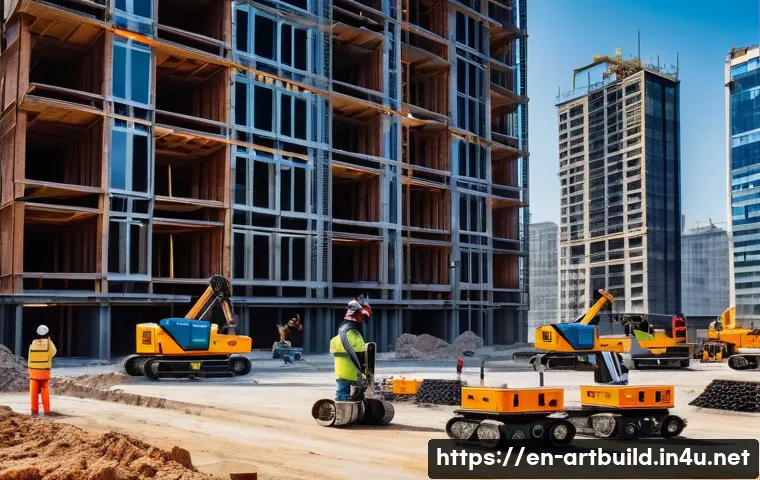
Think about drones equipped with AI, autonomously surveying a site, identifying potential hazards, or meticulously tracking progress against the digital twin of the building.
Or consider robotic bricklayers that can work tirelessly and with incredible accuracy, far beyond human capabilities for repetitive tasks. This shift is profoundly impacting schedules and budgets, reducing errors that used to cause costly delays and rework.
I’ve heard countless stories from developers about projects finishing ahead of time and under budget, thanks to the precision and predictive power that AI brings to the construction phase.
It truly feels like we’re finally building smarter from the ground up, moving away from age-old inefficiencies and embracing a future where construction is as much about data and intelligence as it is about steel and concrete.
Autonomous Site Monitoring and Safety
AI-powered drones and sensors are revolutionizing how construction sites are managed. These intelligent systems can continuously monitor progress, detect discrepancies between planned designs and actual construction, and even identify safety risks in real-time.
Imagine a drone spotting a worker in a hazardous area without proper safety gear and instantly alerting a supervisor. This predictive capability is a game-changer for reducing accidents and ensuring compliance with safety regulations, making sites significantly safer places to work.
Robotics for Precision and Speed
Robotics, often guided by AI, are taking on repetitive and dangerous tasks in construction. From precise welding to laying bricks at an incredible pace, these machines offer unparalleled accuracy and efficiency.
This not only speeds up construction timelines but also ensures a higher quality of work for certain tasks, reducing the margin for human error. It also allows human workers to focus on more complex, problem-solving, and creative aspects of the build, rather than back-breaking, repetitive labor.
Buildings That Think: Smart Systems and Predictive Maintenance
Have you ever walked into a building that just *feels* right? The temperature is perfect, the lighting adapts to the time of day, and everything just seems to work seamlessly?
Chances are, there’s a hefty dose of AI working behind the scenes. This is where smart building management truly shines, transforming our structures from static boxes into dynamic, responsive environments.
AI algorithms are constantly crunching data from countless sensors – occupancy levels, outside weather, energy prices, even individual preferences – to optimize everything from HVAC systems to lighting and security.
But it goes beyond just making things comfortable. AI is also powering predictive maintenance, which is a total game-changer. Instead of fixing things *after* they break, AI analyzes patterns and anticipates potential failures in systems like elevators, plumbing, or electrical grids.
This means proactive repairs, fewer breakdowns, and a significantly longer lifespan for building components. For building owners, this translates to huge savings in operational costs and a much better experience for occupants.
It’s truly amazing to witness buildings evolve into intelligent entities that actively enhance our lives and operate with incredible efficiency.
Optimizing Energy Consumption and Comfort
AI-driven building management systems are masters of efficiency. By continuously analyzing data from environmental sensors and occupancy patterns, these systems can precisely control heating, ventilation, air conditioning (HVAC), and lighting to maintain optimal comfort levels while drastically reducing energy waste.
Imagine a system learning that a conference room is rarely used on Fridays and adjusting its climate control accordingly, or dimming lights in unoccupied areas.
This level of granular control is something human operators simply can’t achieve consistently.
Anticipating and Preventing Failures
The magic of predictive maintenance lies in its ability to foresee problems. AI algorithms analyze performance data from various building systems—elevators, pumps, electrical circuits—looking for subtle anomalies that indicate impending failure.
This allows maintenance teams to schedule repairs *before* a breakdown occurs, minimizing disruption, extending the lifespan of equipment, and saving significant repair costs.
It’s a proactive approach that moves us away from reactive, costly fixes.
Crafting Cities for Tomorrow: AI in Urban Planning
When I look at our bustling cities, I often wonder how we can make them more livable, sustainable, and genuinely responsive to the people who call them home.
AI is stepping up to answer that question, and it’s utterly fascinating. Imagine AI models simulating traffic flows to design more efficient road networks, or optimizing public transportation routes based on real-time demand.
This isn’t just about moving people around; it’s about creating healthier, more vibrant communities. AI can analyze vast datasets on demographics, environmental factors, and infrastructure to help urban planners make incredibly informed decisions about zoning, resource allocation, and even where to plant trees for maximum environmental benefit.
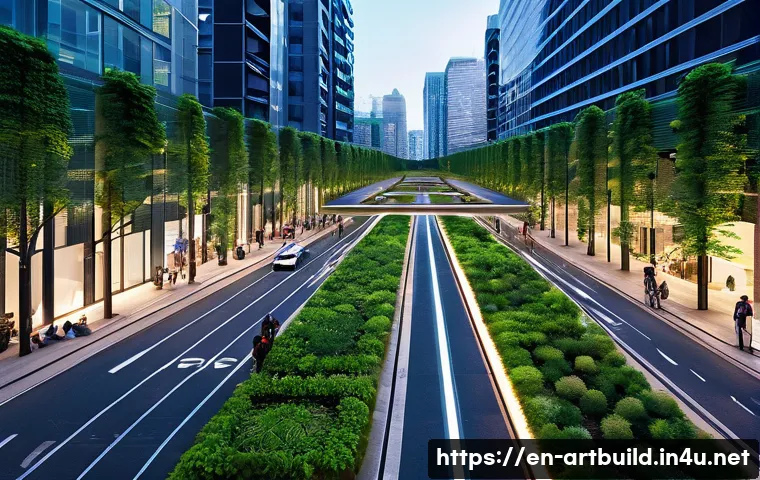
It’s about designing cities that are truly smart, not just technologically advanced, but also deeply empathetic to the needs of their inhabitants. I believe this is where AI really helps us dream bigger about what a city can be – a place that evolves and adapts, much like a living organism, always striving to improve the quality of life for its citizens.
It’s an exciting frontier for anyone passionate about urban development.
Optimizing Infrastructure and Traffic Flow
AI plays a crucial role in improving urban infrastructure. By analyzing massive datasets of traffic patterns, public transport usage, and even pedestrian movement, AI models can identify bottlenecks and suggest optimal designs for roads, intersections, and public transit routes.
This leads to smoother commutes, reduced congestion, and a more efficient use of urban space, directly impacting the daily lives of millions.
Sustainable City Development
For sustainable urban planning, AI is an invaluable tool. It can model the environmental impact of various development scenarios, helping planners optimize for green spaces, water management, and renewable energy integration.
AI can even predict air quality changes based on different urban layouts, guiding decisions that lead to healthier and more environmentally friendly cities.
This helps us create truly resilient urban ecosystems.
The Architect’s New Superpower: Enhancing Human Expertise
Let’s be absolutely clear: AI isn’t here to replace architects. No way! From my perspective, it’s a powerful new set of tools that amplify our human capabilities, making us even better at what we do.
Think of AI as an incredibly intelligent assistant, handling the tedious, data-heavy tasks, running complex simulations, and sifting through vast amounts of information in seconds.
This frees up architects to focus on the truly creative, conceptual, and human-centric aspects of design. We can spend more time on client relationships, on understanding the subtle nuances of human interaction with space, and on pushing the artistic boundaries of our craft.
It’s about leveraging technology to elevate our expertise, allowing us to delve deeper into ethical considerations, cultural sensitivities, and the sheer artistry that makes architecture such a profound human endeavor.
The blend of human intuition and AI precision is truly unlocking a golden age for architectural innovation, and I’m thrilled to be witnessing it firsthand.
Accelerating Research and Information Gathering
Architects spend considerable time researching materials, building codes, and historical precedents. AI can drastically cut down this time by rapidly sifting through vast databases, presenting relevant information, and even summarizing complex documents.
This allows designers to access critical knowledge much faster, informing their decisions with greater accuracy and efficiency.
Augmenting Creativity and Conceptualization
While AI can generate designs, its real power for architects lies in augmenting their creativity. By presenting diverse options and insights, AI can spark new ideas, challenge conventional thinking, and help designers visualize solutions they might not have otherwise conceived.
It serves as a creative partner, expanding the palette of possibilities for human imagination.
Building for a Greener Tomorrow: AI’s Role in Sustainable Architecture
If there’s one area where AI truly excites me in architecture, it’s its profound impact on sustainability. For years, we’ve strived to build green, but often with limited data and complex calculations that made optimal solutions hard to achieve.
Now, AI is transforming this landscape entirely. We’re talking about AI-powered analyses that can predict a building’s energy consumption with astounding accuracy even before it’s built, allowing architects to make informed decisions about materials, orientation, and systems.
It can optimize everything from natural ventilation and daylighting strategies to the efficient use of recycled materials. I’ve personally seen examples where AI has helped reduce a building’s carbon footprint by significant margins, simply by identifying the most efficient configurations and material choices.
This isn’t just about ticking boxes for green certifications; it’s about genuinely creating structures that harmonize with our environment, minimize waste, and contribute positively to our planet.
This feels less like a trend and more like an essential evolution in how we approach every single project, ensuring a more responsible and ecological built environment for generations to come.
Optimizing Material Selection and Waste Reduction
AI can analyze the environmental impact of various building materials, considering factors like embodied energy, recyclability, and sourcing. This allows architects to make data-driven decisions that minimize the carbon footprint of their projects and reduce construction waste.
Furthermore, AI can optimize cutting patterns for materials, ensuring maximum utilization and less scrap.
Enhancing Renewable Energy Integration
From designing optimal solar panel layouts to predicting energy generation from wind turbines based on local weather patterns, AI is crucial for integrating renewable energy into architectural projects.
It helps ensure that buildings can generate as much, if not more, energy than they consume, moving us closer to truly net-zero structures. Here’s a quick look at some key ways AI is reshaping architecture:
| AI Application Area | Impact on Architecture | Key Benefits |
|---|---|---|
| Generative Design | Automated design exploration, rapid iteration | Speed, optimization, novel solutions |
| Predictive Analytics | Anticipating building performance, maintenance needs | Efficiency, cost savings, extended lifespan |
| Construction Robotics | Automated building processes on-site | Precision, speed, enhanced safety |
| Smart Building Management | Real-time optimization of building systems | Energy savings, occupant comfort, operational efficiency |
| Urban Planning & Simulation | Modeling city development, traffic, environmental impact | Sustainable cities, improved livability, efficient infrastructure |
| Material Science & Optimization | Eco-friendly material selection, waste reduction | Sustainability, reduced carbon footprint, cost control |
Wrapping Things Up
Whew, what a journey through the fascinating world where AI meets architecture, right? It’s genuinely thrilling to see how these cutting-edge tools aren’t just buzzwords but are truly reshaping how we envision, design, and construct our environments. From my own experiences and what I’ve seen across the industry, it’s clear that AI is becoming an indispensable partner, allowing us to dream bigger, build smarter, and create spaces that are not only beautiful but also incredibly efficient and sustainable. I truly believe that the future of architecture is a brilliant collaboration between human ingenuity and artificial intelligence, leading to a built world that’s more imaginative, responsive, and ultimately, more livable for all of us.
Handy Tips for Navigating AI in Architecture
1. Don’t be afraid to experiment with AI tools. Seriously, dive in! Many platforms offer free trials or introductory courses that can help you get a feel for how generative design or predictive analytics can integrate into your workflow. I started with a simple tutorial, and it opened up a whole new realm of possibilities for my design process. You’d be surprised how intuitive some of these interfaces are once you get past the initial apprehension, truly empowering you to explore designs faster than ever before. This hands-on approach is, in my opinion, the quickest way to truly grasp AI’s potential and how it can directly benefit your unique projects and artistic vision.
2. Always keep the human element at the forefront. While AI can optimize structures and systems, the ultimate goal of architecture is to serve people. Use AI to handle the complex calculations and iterations, but always filter the results through the lens of human experience, aesthetics, and emotional connection to space. Remember, we’re designing for life, not just for algorithms. The most successful projects are those that blend technological efficiency with a deep understanding of human needs and desires, creating spaces that feel intuitive and inspiring, not just functionally perfect.
3. Continuous learning is your superpower in this evolving landscape. The field of AI is moving at lightning speed, and staying updated with the latest advancements, software, and best practices will keep you at the cutting edge. Consider online courses, webinars, or even just following key industry leaders on social media to keep your knowledge fresh. It’s not just about learning new tools, but understanding the underlying concepts that drive them, which will help you adapt to future innovations. I’ve found that dedicating even a small amount of time each week to learning keeps me feeling connected and proactive in a rapidly changing environment.
4. Think interdisciplinarily. AI blurs the lines between design, engineering, data science, and even urban planning. Cultivating a broader understanding of these interconnected fields will make you a more versatile and invaluable professional. Collaborating with data scientists or AI specialists can also lead to truly groundbreaking projects, fostering innovative solutions that a single discipline might miss. The most exciting architectural breakthroughs often happen at these intersections, where diverse expertise converges to solve complex problems in novel ways. It’s about building bridges, not just buildings.
5. Prioritize ethical considerations in your AI-driven designs. As powerful as these tools are, it’s crucial to use them responsibly. Think about data privacy in smart buildings, accessibility for diverse users, and ensuring that AI doesn’t perpetuate biases in urban planning. Our responsibility as architects extends to shaping an equitable and inclusive future through technology. We have a unique opportunity to use AI not just for efficiency but for social good, making sure our innovations truly benefit everyone in society, regardless of background or ability. It’s a challenge, but one that makes our work profoundly more meaningful.
Key Takeaways to Keep in Mind
So, if you’re still pondering the big picture, here’s the gist from my perspective: AI isn’t some futuristic concept; it’s a tangible, impactful reality transforming architecture right now. We’ve seen how it dramatically accelerates the design process through generative capabilities, allowing for unprecedented exploration and optimization, truly taking the grunt work out of early concepts. On the construction front, AI-powered robotics and monitoring are making sites safer and significantly more efficient, saving both time and resources, which is a massive win for everyone involved. And once buildings are up, smart AI systems ensure they operate with peak energy efficiency and offer predictive maintenance, making them truly intelligent and responsive to their occupants, reducing those frustrating unexpected breakdowns. Plus, AI is absolutely critical in crafting more sustainable and livable urban environments, helping us build cities that are genuinely greener and more user-friendly. Ultimately, this isn’t about technology replacing our human brilliance; it’s about AI becoming an extraordinary partner that amplifies our creativity, expertise, and ability to build a better, more sustainable world. Embrace it, learn it, and watch your architectural vision reach new heights!
Frequently Asked Questions (FAQ) 📖
Q: So,
A: I in architecture sounds amazing, but what are some tangible ways it’s actually being used right now to make a real difference in design and construction?
A1: Oh, this is such a brilliant question, and honestly, it’s what really gets me excited! When I first started diving into this, I was looking for exactly that – not just futuristic dreams, but what’s happening on the ground.
And let me tell you, AI is already making waves in incredible ways. One of the biggest game-changers I’ve seen is in what’s called generative design. Imagine needing to design a new office building on a complex site, and instead of manually sketching a few options, AI can churn out literally thousands of optimized layouts in a fraction of the time.
It considers everything from daylighting and ventilation to pedestrian flow and structural integrity, helping architects discover solutions they might never have thought of on their own.
I’ve personally seen projects where AI has helped reduce material waste by optimizing structural forms, or even design more energy-efficient building envelopes by simulating various climate scenarios with astonishing accuracy.
It’s like having an incredibly powerful co-designer that handles all the tedious, data-heavy analysis, freeing up human architects to focus on the truly creative and visionary aspects.
Plus, for construction, AI-powered systems are getting so good at spotting potential clashes in building information models (BIM) before anything is even built, saving tons of time and money down the line.
It’s truly amazing to witness!
Q: This all sounds fantastic, but let’s be real – are architects going to lose their jobs to
A: I? It’s a bit daunting to think about, isn’t it? A2: I totally get this concern, and trust me, it’s one of the most common questions that pops into everyone’s mind when we talk about AI in any field, including architecture.
I’ve had those moments too, wondering about the future. But from my vantage point, after really digging into this, the consensus among industry leaders and innovators isn’t about replacement; it’s about augmentation and transformation.
Think of AI not as a competitor, but as the ultimate assistant, taking on the repetitive, data-crunching, and optimizing tasks that often bog down the design process.
This actually frees up architects to lean into their uniquely human strengths: creativity, empathy, conceptual thinking, and storytelling. We’re still the ones who understand human needs, cultural contexts, and the emotional impact of space.
What I’ve personally experienced is that AI allows us to explore more possibilities, spend less time on tedious revisions, and ultimately, design better, more responsive buildings.
New roles are even emerging, like AI-savvy architects who specialize in training and guiding these intelligent systems. So, instead of fearing job loss, I genuinely believe architects who embrace AI will find themselves empowered to tackle more complex and impactful projects, pushing the boundaries of what’s possible in design.
It’s about evolving, not being made obsolete!
Q: For someone like me, an architect or even a student, who wants to get a head start, what’s the best way to start integrating
A: I into my workflow, and what exciting trends should I keep an eye on for the future? A3: That’s a proactive mindset I absolutely adore! Diving in is key.
If you’re an architect or student, my number one piece of advice is to start small and experiment. Don’t feel like you need to become a coding wizard overnight.
Many architectural software companies are already integrating AI tools directly into their platforms. Look for features related to “generative design,” “parametric modeling,” or “performance analysis” in programs like Rhino with Grasshopper, Revit, or even new specialized AI tools.
Take an online course – there are tons popping up now on platforms like Coursera, Udemy, or even university extensions that focus specifically on AI for designers.
Just playing around with these tools, even on a small personal project, will give you invaluable hands-on experience and help demystify the tech. For the future, oh boy, get ready!
I’m particularly thrilled about the developments in predictive modeling for urban planning, where AI can simulate the impact of new developments on traffic, social equity, and environmental factors before a single brick is laid.
Then there’s adaptive architecture – imagine buildings that intelligently adjust their internal climate, lighting, or even structural elements based on real-time data and occupant behavior.
We’re also seeing AI’s role expand in creating truly sustainable buildings, not just by optimizing energy but by analyzing entire material lifecycles.
It’s a thrilling time to be in architecture; the opportunities to innovate and shape our world in more intelligent, human-centric ways are simply limitless!